

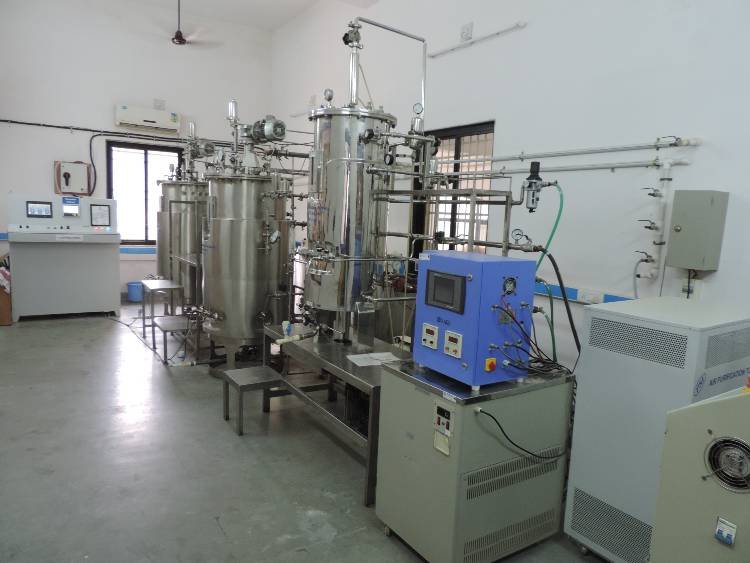
Gujarat State Biotechnology Mission to develop proposed ecosystem with an estimated outlay of Rs 50 crore over five years; initiative aims to promote indigenous biofertilizers, biopesticides and agricultural innovation
An MoU will be signed between GSBTM and Anand Agricultural University on October 9 in Bhavnagar to establish biomanufacturing facilities for biofertilizers and biopesticides
Gandhinagar: The ongoing conflict and instability in West Asia have highlighted the vulnerability of global fertilizer supply chains, underscoring the need to strengthen domestic agricultural-input security. In response to these challenges, Gujarat, under the leadership of Chief Minister Shri Bhupendra Patel, is planning an integrated bio-manufacturing ecosystem to promote biofertilizers and biopesticides, support innovation and reduce dependence on conventional agricultural inputs.
The Gujarat State Biotechnology Mission (GSBTM), under the Department of Science and Technology, is developing the proposed ecosystem with an estimated outlay of Rs 50 crore over five years.
The initiative aims to connect the state’s microbial resources, agricultural universities, biotechnology institutions, startups, micro, small and medium enterprises (MSMEs), cooperatives and farmers. It will establish an integrated pathway covering microbial discovery, research, product formulation, manufacturing, field validation and farmer adoption.
West Asia Crisis Highlights Fertilizer Supply Risks
The West Asia crisis has demonstrated how geopolitical tensions can disrupt energy markets, shipping routes and agricultural-input supplies.
These developments underline the close relationship between fertilizer security, energy supplies, mineral resources, shipping and geopolitics. Natural gas is a key input in nitrogen fertilizer production, while phosphate and potash fertilizers depend on mineral resources concentrated in particular regions.
For farmers, timely availability is critical because fertilizers must be applied at specific stages of crop growth. Delays can affect productivity and increase cultivation risks.
Strengthening India’s Agricultural Resilience
India has established systems to assess fertilizer demand, coordinate domestic production and imports, and ensure the distribution of subsidised fertilizers such as urea, DAP, muriate of potash (MOP) and NPK.
The challenge, therefore, is not simply to secure larger quantities of fertilizer but to build a more resilient agricultural-input system. Biofertilizers, biostimulants, microbial consortia and other biological technologies can provide additional options for farmers while supporting nutrient-use efficiency and soil health. Conventional fertilizers will remain important, but biological alternatives can contribute to diversifying agricultural-input sources.
Gujarat’s Scientific Foundation
Gujarat’s proposed initiative builds on existing research and commercialisation capabilities. Anand Agricultural University (AAU) has developed and commercialised biofertilizer technologies using microorganisms such as Azotobacter, Azospirillum, Rhizobium, phosphate-solubilising bacteria and potassium-mobilising bacteria. The university has also developed microbial consortia, including Bio-NP and Bio-NPK.
AAU had produced and sold around 42 lakh litres of biofertilizer products up to 2024–25, covering nearly 42 lakh hectares.
AAU also maintains a repository of more than 1,000 microbial cultures relevant to biofertilizers, biopesticides and biodecomposers. DNA sequence data of 148 microbial strains have been deposited with the National Center for Biotechnology Information (NCBI).
These resources will provide a scientific foundation for the proposed statewide ecosystem.
An MoU will be signed between the GSBTM, Department of Science and Technology, and Anand Agricultural University on October 9 (Friday) in Bhavnagar for establishing biomanufacturing facilities for biofertilizers and biopesticides. The MoU will be signed in the august presence of Shri Arjunbhai Modhwadia, Minister for Science and Technology, and Shri Jitubhai Vaghani, Minister for Agriculture and Farmers Welfare, Cooperation, and Animal Husbandry.
Four Pillars of the Proposed Initiative
The programme will focus on four interconnected components.
The first is a central bio-strain repository and pilot facility at AAU, comprising a proposed 528.96-square-metre biorepository and a 1,054-square-metre pilot-scale facility. The programme also aims to conserve more than 5,000 native microbial strains, undertake genomic sequencing of over 500 strains, establish a digital Gujarat Bio-Strain Database and develop more than 10 novel bio-formulations.
The second component will promote startup and MSME manufacturing. An allocation of ₹13 crore is proposed to support startups, small enterprises, cooperatives, non-governmental organisations and Farmer Producer Organisations in developing pilot manufacturing capabilities.
The third pillar focuses on scientific field validation, with ₹9 crore proposed for testing biological products across different agro-climatic regions and conducting farmer demonstrations through Gujarat’s agricultural university network.
The fourth component aims to establish large-scale cooperative manufacturing. Automated fermentation, formulation and packaging facilities are proposed through cooperative partners, including AMUL, Banas, SUMUL and KRIBHCO.
From Laboratory Research to Farmers’ Fields
The programme seeks to connect government institutions, researchers, entrepreneurs, manufacturers, cooperatives and farmers through a coordinated value chain. Agricultural universities will contribute research and field validation, biotechnology institutions will support microbial discovery, and startups and MSMEs will help commercialise innovations.
The long-term objective is to transform indigenous biological resources into scalable agricultural products manufactured within India. If successfully implemented, the initiative could strengthen Gujarat’s bioeconomy while contributing to agricultural resilience, soil health, farmer welfare and national self-reliance.
